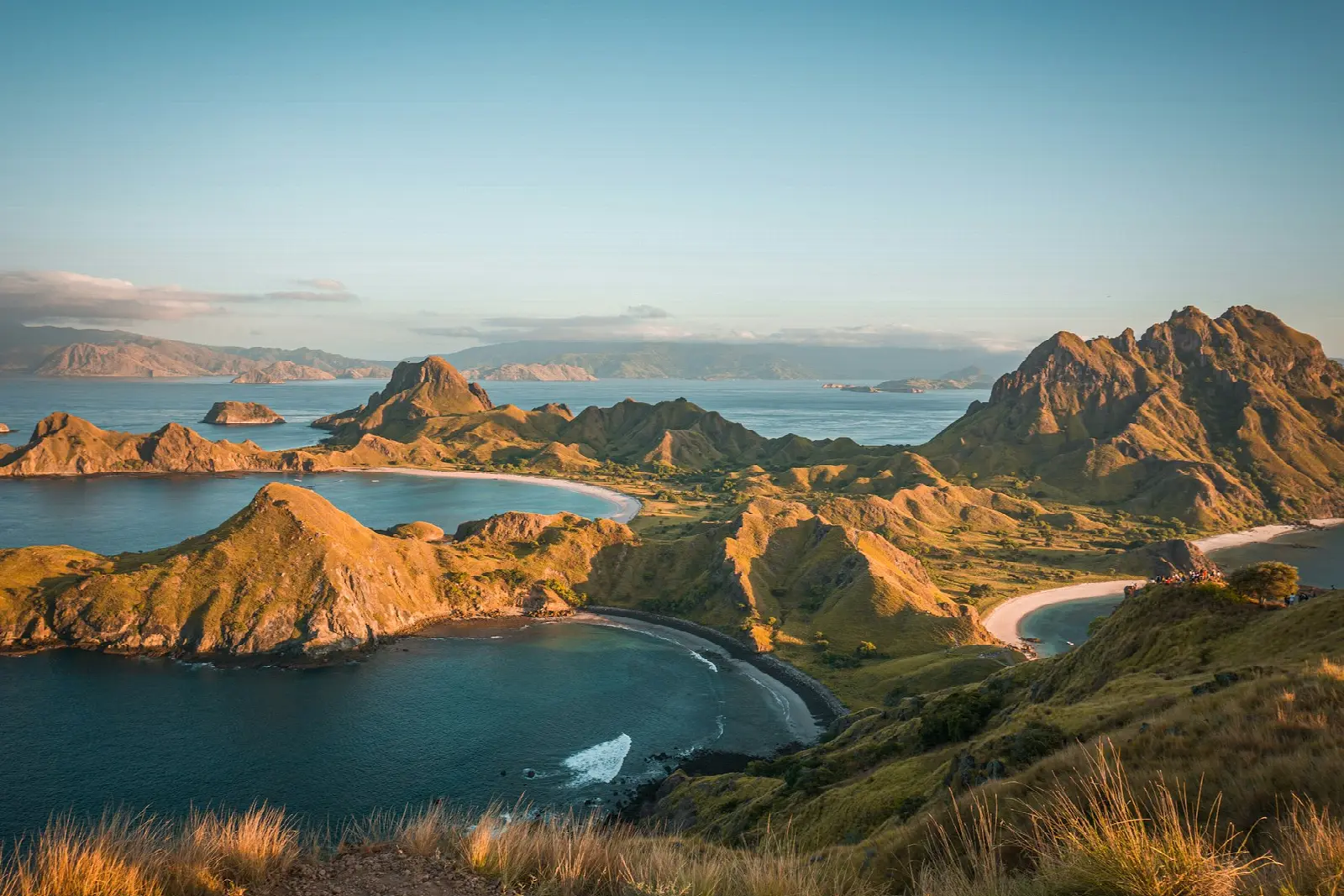
Picture waking up on a gently rocking wooden boat, coffee in hand, with brown hilly islands lined up on the horizon. No fences, no city crowds. Just sea and a sky that keeps changing colour. That's the general picture of a holiday in Labuan Bajo, a port town in West Manggarai Regency, East Nusa Tenggara.
Labuan Bajo itself is only the gateway. The real destination is Komodo National Park, a cluster of islands where Komodo dragons live in the wild. This guide helps you understand what's out there and how to plan an unhurried trip.
Why Komodo is special
Komodo National Park was designated a UNESCO World Heritage Site in 1991. The area protects the Komodo dragon, the world's largest lizard, which lives in the wild on only a few islands in Indonesia. It can grow to around three metres, and although it looks slow, it can move quickly when hunting. That is why visits are always accompanied by rangers.
Beyond the dragons' reputation, the area also has waters rich in coral reefs and marine life. The combination of ancient land animals and clear sea makes Labuan Bajo different from typical beach destinations.
The islands usually visited
Komodo Island and Rinca Island
These two islands are the most common places to meet Komodo dragons. You walk with a ranger along set trails. Rangers carry forked sticks and will tell you when to stop or move away. Listen to them, and never wander off the path on your own.

Padar Island
Padar is famous for the viewpoint at the top of its hill. After a steep, rocky climb of roughly thirty to forty-five minutes, you see three sandy bays in different colours: white, black, and reddish. The climb is best done in the morning or late afternoon to avoid the heat, and wear closed shoes.
Pink Beach
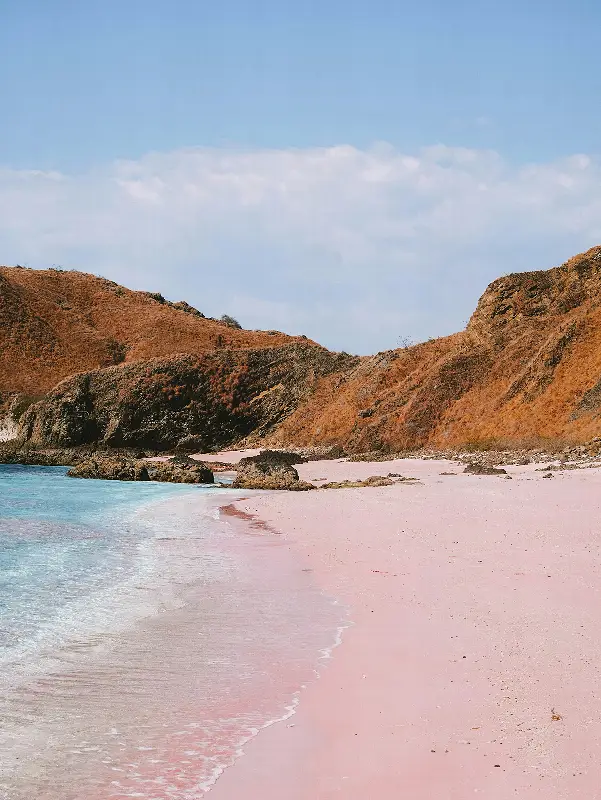
The sand is pink because fragments of red coral organisms mix with the white sand. The water is clear and calm, ideal for shallow snorkelling. Don't take sand or coral home as souvenirs.
Manta Point and snorkelling spots
At certain spots you have a chance to swim near manta rays, although sightings depend on currents and season. Don't set your expectations too high. Treat meeting a manta as a bonus, and still enjoy the corals and fish around you.
Kalong Island and Gili Lawa
Around dusk, thousands of flying foxes leave the island where they roost, forming a long black line across an orange sky. Many boats stop there just to watch. Gili Lawa offers a hill with a view of a curved bay that is beautiful when the light falls at an angle.
The best time to go
Generally April to December tends to be dry with calmer seas, so sailing between islands is more comfortable and Komodo dragons are easier to see. Outside that range, rain and waves can change the schedule. The islands look greenest after rain and browner at the end of the dry season; both have their own charm.
Planning trip length
Three days and two nights is usually enough to experience the core of Labuan Bajo: Komodo or Rinca, Padar, Pink Beach, a snorkelling spot, and dusk at Kalong. If you want a more relaxed pace or to add dive sites and villages, four to five days gives room to breathe. Our package on the Labuan Bajo page follows the three-day, two-night pattern.
A sample three-day, two-night plan
As an idea, not a fixed schedule that applies to every operator:
- Day one: arrive in Labuan Bajo, sail to the nearest islands, snorkel briefly, then watch the flying foxes at dusk.
- Day two: hike Padar Island in the morning, stop at Pink Beach for a swim, then walk with a ranger to meet Komodo dragons.
- Day three: snorkel at the final spot, return to port, and catch your flight home.
Note that the third day is kept loose. That's deliberate, because delays to sailings due to weather are easier to absorb when the return schedule isn't too tight.
Practical tips
- Bring seasickness medicine even if you feel strong. Waves between islands can be surprising.
- Wear a hat, sunglasses, and reef-safe sunscreen; many spots have no shade.
- Wear closed shoes for Padar and the Komodo trails, and light sandals for the boat.
- Prepare a waterproof pouch for your phone and camera when transferring to the tender boat.
- Don't bring strongly scented food or wear flashy clothes when approaching Komodo dragons, and keep your distance as instructed by rangers.
- Park entrance fees and visiting rules may change. Ask the organiser for the latest information before you go.
How to get to Labuan Bajo
The town is served by an airport with flights from several major cities, including Jakarta and Denpasar. The airport is only a short ride from the harbour. Arriving a day before your sailing is a good habit, because flights are sometimes delayed and the boat won't wait for you.
Etiquette to keep in mind
Labuan Bajo is busy, and the pressure on its environment is real. Take your rubbish back, avoid touching coral, and don't feed wildlife. Choose boat operators who take safety seriously: enough life jackets, an experienced crew, and a clear route. Choosing responsible services helps keep this area beautiful.
Final thoughts
Labuan Bajo isn't a place for rushing through an island checklist. Enjoy its rhythm: wake up on the boat, walk with a ranger, plunge into the sea, and end the day under a sky full of flying foxes. If you'd like to experience the trip without the headache of arranging boats and schedules, see the nearest departures on the Labuan Bajo Komodo Voyage package page.