Bucket lists often turn into lists of photos to recreate. Yet the places that stay with us the longest usually give us something beyond the view: a conversation with a local, a sense of smallness before nature, or simply the realisation that Indonesia is far bigger than we imagined.
The seven destinations below aren't ranked. We chose them because each represents a different side of the country: sea, mountains, temples, lakes, and living culture. If you can only choose one, pick the one that tugs hardest at your curiosity.
1. Raja Ampat, Southwest Papua
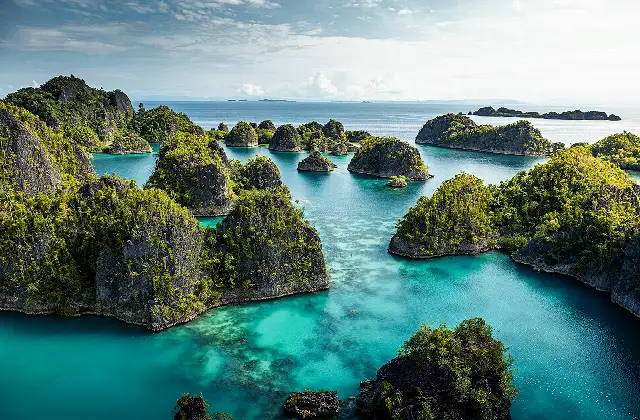
This archipelago in the far east lies in the heart of the Coral Triangle and is recognised as one of the most biodiverse marine areas in the world. The name Raja Ampat refers to its four main islands, Waigeo, Batanta, Salawati, and Misool. The journey is long and not cheap, but the reward is glass-clear water and karst islands that look like miniature gardens. Full coverage is in our dedicated Raja Ampat article.
2. Labuan Bajo, East Nusa Tenggara
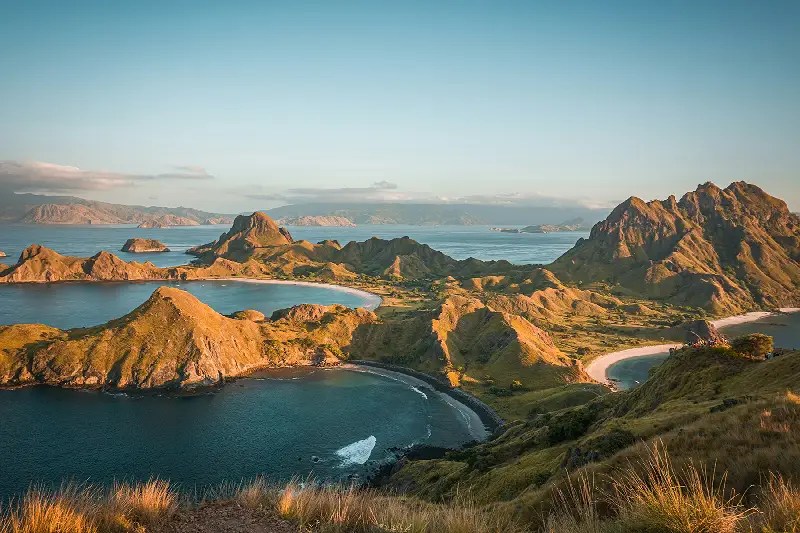
Labuan Bajo is the gateway to Komodo National Park, a UNESCO World Heritage Site since 1991. Here you can see Komodo dragons in the wild, climb a hill on Padar Island to look out over three sandy bays, and sleep on a wooden boat. Perfect for those who like a mix of light adventure and the sea. We wrote the guide in our Labuan Bajo article.
3. Borobudur and Yogyakarta
Borobudur, a Buddhist temple from the 9th century, and Prambanan, a Hindu temple complex also from the 9th century, are both listed as UNESCO World Heritage Sites. Standing on the terraces of Borobudur before dawn, while the mist still hangs, brings a peace that's hard to explain. Add a trip along Merapi's lava trails and gudeg in the city, and you get one journey that touches history, nature, and food at once. See the packages on the Yogyakarta page.
4. Lake Toba and Samosir Island
Toba is the largest volcanic lake in the world, formed by a supervolcano eruption estimated around 74,000 years ago. In its middle, Samosir Island holds Batak Toba culture: carved traditional houses, the old stone court seats at Huta Siallagan, and ulos cloth worn in ceremonies. The area is recognised as a UNESCO Global Geopark. The air is cool, the pace of life slow, and it suits anyone who needs a break from the city. More on the Lake Toba page.
5. Tana Toraja, South Sulawesi
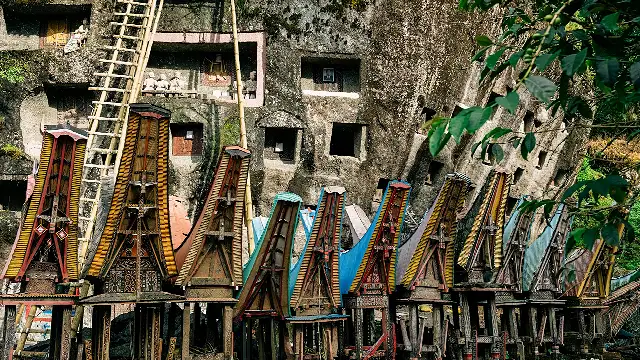
Tongkonan houses with curved roofs like boats, tombs carved into cliffs, and the Rambu Solo' funeral ceremony, the most important event in the life of the community. Toraja makes us look at death in a different way. Come with an attitude of learning rather than simply looking for something exotic, and follow your guide's instructions if you happen to witness a ceremony. The Tana Toraja page has a full picture of the trip.
6. Sumba Island, East Nusa Tenggara
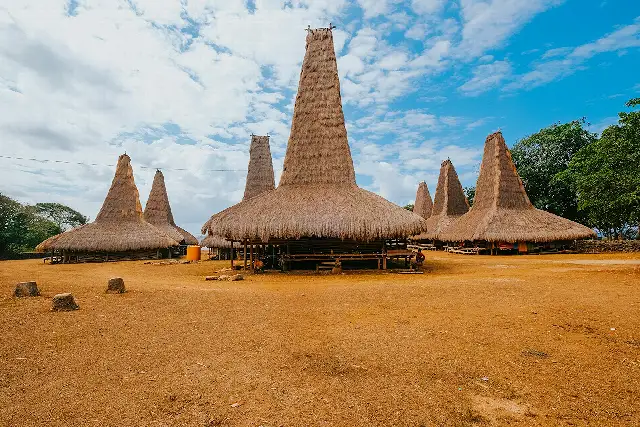
Sumba offers a landscape unlike its neighbouring islands: savanna turning golden in the dry season, rocky cliffs dropping into the sea, and horses running across the plains. Traditional houses with towering roofs stand among megalithic stone tombs, and the ancestral Marapu faith is still held by many residents. Its ikat weavings carry motifs that tell of family and social status. Learn more on the Sumba Island page.
7. Wakatobi, Southeast Sulawesi
Its name comes from four islands: Wangi-Wangi, Kaledupa, Tomia, and Binongko. The area is a national park and part of the Coral Triangle. The coral here is close enough to shore that even beginners can enjoy it by snorkelling. Also visit the Bajo settlements, a seafaring community that builds stilt houses over shallow sea. Check the Wakatobi page for trip packages.
If this is your first bucket list
Beginners should start with the easiest to reach, not the most famous. Yogyakarta and Lake Toba have well-developed transport access and many lodging options, so you can learn to organise a trip without many surprises. Save Raja Ampat or Wakatobi for when you have savings and long leave; travelling there demands layered logistics and flexibility about the weather.
One habit worth copying: read about a place before you go. People who know why tongkonan are shaped like boats or how Samosir ended up in the middle of a lake usually come home with far more stories. Just ten minutes of reading changes how we see.
How to pick one of the seven
Not everyone needs the most spectacular scenery. Here are some questions that help narrow your choice:
- Do you prefer sea or land? Raja Ampat, Labuan Bajo, and Wakatobi are sea stories; Toba, Toraja, and Sumba tell more of their story through land and culture.
- How many days do you have? Yogyakarta and Toba are easy to reach on a long weekend, while Raja Ampat needs far longer travel time.
- How comfortable are you with simple conditions? Sumba and Wakatobi call for flexibility on facilities and schedules.
- Do you want to learn about culture? Toraja and Samosir offer the richest experiences.
A reminder about timing
Every place has a friendlier season. In general, marine destinations are most pleasant in the dry season because the waves are calmer, while in the highlands the dry season brings clear skies. Even so, check the latest conditions before booking transport, especially for island crossings that depend on the weather.
Final thoughts
A good bucket list isn't measured by the number of ticks, but by how deeply you enjoy one place. Pick one destination, learn its story, and go with curiosity. The rest will follow.